To finally get back to you on the Thursday question, I have not one answer, but four: Entertainment Sports Programming Network. Ok, now that that's cleared up, let's move right along to today's question.
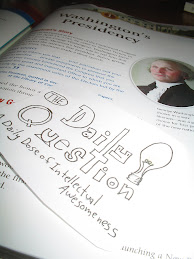
Back in the old days, presidents used to face the same problems when running for president as they do now. Bad habits, political philosophies, or in this case, age. When this respected general ran for office, he was constantly criticized for being to old. He kept on trucking though, and eventually got the Whig nomination with the slogan "Tippecanoe and Tyler Too." So for today I ask: Which president was this, and what do you think happened to him?
Showing posts with label presidents. Show all posts
Showing posts with label presidents. Show all posts
Sunday, July 26, 2009

Tuesday, July 21, 2009
July 21- Tuesday
5 sets of presidents share names. I'll go in chronological order-
John Adams was the father of John Quincy Adams. Neither had a very successful presidency in my opinion. Next comes William Henry Harrison and his grandson, Benjamin. Both were elected partially because of their successes in battle, William in the Revolution and Benjamin in the Civil War. Moving right along, we have Andrew Johnson and Lyndon B. Johnson, the only presidents on the list who weren't related. After them the Roosevelts, Theodore and Franklin, whose terms were almost 40 years apart. They were 5th cousins. Finally, we have the George H.W. and George W. Bush, the most recent pair.
Now for today's question. I understand I am notorious for asking periodic table questions, but today is a variation on the subject. You see, back in the old days, the Greeks had their own version of the elements. Substances that could not be broken down anymore than they already were; the most basic parts of earth. And to prove it, all you had to do is burn a tree. So for today, I ask: What were the original Greek elements?
(Please Comment)
John Adams was the father of John Quincy Adams. Neither had a very successful presidency in my opinion. Next comes William Henry Harrison and his grandson, Benjamin. Both were elected partially because of their successes in battle, William in the Revolution and Benjamin in the Civil War. Moving right along, we have Andrew Johnson and Lyndon B. Johnson, the only presidents on the list who weren't related. After them the Roosevelts, Theodore and Franklin, whose terms were almost 40 years apart. They were 5th cousins. Finally, we have the George H.W. and George W. Bush, the most recent pair.
Now for today's question. I understand I am notorious for asking periodic table questions, but today is a variation on the subject. You see, back in the old days, the Greeks had their own version of the elements. Substances that could not be broken down anymore than they already were; the most basic parts of earth. And to prove it, all you had to do is burn a tree. So for today, I ask: What were the original Greek elements?
(Please Comment)
Sunday, July 19, 2009
July 19- Presidents
I'll start off with the answer for yesterday. The reason the monument is multicolored is because it was built in 2 parts, mostly 1848-1856 and 1876-1884. The original designers were not able to finish because they lacked funding. Not only that, but the civil war started breaking out during the building process.
For more info visit: http://www.nps.gov/nr/travel/wash/dc72.htm
So today's question. It is a bit random, but a bit of random presidential trivia is better than none at all. Out of all 44 of our presidents, many share the same last names. So for my daily question, I ask: How many sets of presidents share a last name, and which names are they?
For more info visit: http://www.nps.gov/nr/travel/wash/dc72.htm
So today's question. It is a bit random, but a bit of random presidential trivia is better than none at all. Out of all 44 of our presidents, many share the same last names. So for my daily question, I ask: How many sets of presidents share a last name, and which names are they?
Saturday, July 18, 2009
July 18- Random
A few weeks of vacation has given me time to ponder over the blog. Is a format change necessary? Should I make it more interactive? Over the next few weeks I'll be looking at other blogs, and experimenting with my own to figure out how best to conduct The Question. If you have any ideas, please leave a comment. Anyway, I probably should commence in the question for today. The reason I haven't been blogging was because I've been in the capitol. Now, when you're in the capitol, it is impossible not to notice the Washington Monument. Since the buildings in the city are size restricted, the monument is able to tower majestically over everything else. But, if you notice, a third of the way up the monument changes color. So today, I ask, why is the symbol of our founding father's greatness multicolor?
Today, I will be trying out a new format, the format being no posted answer. Please comment if you like or dislike, or even better, about the answer.
Today, I will be trying out a new format, the format being no posted answer. Please comment if you like or dislike, or even better, about the answer.
Sunday, June 21, 2009
June 21- Presidents
Since it is The Daily Question's trend to incorporate questions with holidays, it would be a crime not to ask a presidential question about Father's Day. I was going to ask how many father/son pairs there were in the White House, but that's to easy. To Google I went. Originally, Father's Day (or Fathers' Day, if you're an English major) was started in Eastern Washington state in the 1910's. By the 1930's, companies had begun marketing the holiday as a commercial day. But who made it a "holiday"? With that, I ask the question: Which president made Father's Day a federal Holiday?
The president was Lyndon Johnson, and he declared it in 1966.
The president was Lyndon Johnson, and he declared it in 1966.
Monday, June 15, 2009
This Ongoing Week's Peculiarity Part 2
In fear of jeopardizing the success of The Question, I am going to post my entire paper, and then return to normal postings. Hope you enjoy! If in the unlikely event you experience a spelling or grammatical error, please comment and tell me so.
What it Takes to be Great
Throughout the course of American history, a select few behemoths of men and women have forever changed the face of culture, society, and even the American way of life itself. They have included politicians, artists, war heroes, writers and athletes. Most have come from different lifestyles, different states, and different niches. So what brings these exclusive few into the pantheon of American greatness? In my opinion, their ability to affect the public came from their ability to effectively communicate with the public. There is no better example than that of George Washington and Ulysses S. Grant. Both were shockingly different, yet both had successful careers as high ranking generals and then two-term presidents. At first glance, it seems improbable that they had anything in common, but if you look just beneath the surface, you can see their two genius techniques of reaching out to the common man, through public image and social behavior.
Ulysses S. Grant was born on April 27, 1822 in Ohio. He was born into a middle class family. His father, Jesse, owned a modestly successful tannery that brought a fair amount of money into the family. Jesse Grant was very ambitious and opinionated. He acquired these personality traits when working for a judge’s family. They helped educate him and get his tannery started (Bunting 9). On the other side of the spectrum, his mother Hannah was often described as a quiet or taciturn woman, a term often used to depict Grant (Bunting 9, Bunting 2). Ulysses had 5 siblings, and for most of his life, he remained one of his father’s favorites. For this reason, his father often pushed him towards greatness and nothing less. One example of this was his father’s insistence that he go to boarding school in preparation for attendance at West Point and a career in the military. Although he ultimately followed this path, the military life was originally not appealing to Grant.
Now this is the first difference we can see between the two. George Washington was born on February 22, 1732. However, he wasn’t being pushed for greatness the way Grant was by his father. Being born into an aristocratic Southern family, he might not have been able to do much more than be a gentleman farmer (Howard). The closest thing that came to academic excellence for Washington was being sent to boarding school a couple of times. By the time he was 16 he had established some connections and was trying to accumulate land.
One thing that can be said of Grant at this point is that he was a “doer”, and remained so for his entire life. During the Civil War, Grant usually did what needed to be done, quickly and efficiently. A job started was always finished. “One of my superstitions has always been when I started to go anywhere, or to do anything, not to have to turn back until the thing intended was accomplished.” (Bunting 11) This attitude helped him get through West Point, and by the time he was through, actually enjoy it.
Here is yet another difference between the two. Though Washington was certainly ambitious, he was not known as a fast reactor. During the Revolutionary War and his presidency, he would often hold war councils or cabinet meetings. The meetings took time, however, with a cabinet of Henry Knox, Alexander Hamilton, John Adams and Thomas Jefferson, the outcome was often good decision making. (The Presidents episode 1)
One thing Grant and Washington did have in common was their love of horses. Both were called some of the best horsemen of their day (The Presidents episode 1, Bunting 18.)
One attribute that made Grant good for riding was his size. Even when he was entering into West Point at the age of 17 he weighed 117lbs and stood 5’1”. Washington rode more for show, which is probably good since his height was over 6 feet (Presidents episode 1).
Only one year after Grant’s graduation from West Point, The Mexican War was beginning. Grant experienced much action throughout the war. This war gave him a chance to hone some of his fighting skills which later made him an effective general. The Mexican War provided him an opportunity to be under fire. In his first glance at combat, he was ordered by Zachary Taylor to attack Mexico’s right flank as an infantryman. Another glance at combat for Grant was his volunteer mission through Monterrey. In this instance, he rode through the streets leaning on the side of his horse, so no one had a shot at him, a tricky equestrian feat at the least (Bunting 24). He was also known to take care of his wounded men. Many of his peers remember Grant tending for the wounded after battle (Bunting 24). Showing his aggressiveness on the battlefield and sympathy towards his men are both traits of a good general and one that would help Grant later.
Here, we can see how Grant’s and Washington’s army experience differ from each other. Even though Washington and Grant participated in smaller wars before the ones they are known for, Washington was rapidly thrown into battle in his early years. His first major command in the French and Indian War was the defense of Fort Necessity. Fort Necessity was built after a brief run in with the French, who were a much larger force. The fort was not very well defended, and Washington later had to surrender to the French. Further into the war, when Washington was under the command of British General Edward Braddock, Braddock was conducting a march to Fort Duquesne. The British were ambushed. American Indians were swarming from the sides of the road, attacking the widely uncovered red-coats in a thin line along the road. Braddock was eventually killed, and Washington had two horses shot from under him and four holes put through his jacket (Adler 53). This was not a good way to begin a military career, especially compared to Grant’s string of successes.
The war with Mexico was only the beginning of Grant’s military career. If not for the bloodiest conflict in American history, the Civil War, his career would have probably spun into some dark corner of history. Grant’s go-get’em attitude helped him in his first war, and would undoubtedly help him win the next. Early in the war, the union suffered at the hands of many inept generals. However, at this same time, Ulysses S. Grant was along out in the West, rising through the ranks, and helping to capture imperative locations along the Mississippi River (Dallek, et al 552)
Fortunately for the Union, Grant’s work in the West didn’t go unnoticed. As early as February, 1862, he was commanding large units of men. He continued to keep pushing, and effectively controlled large chunks of Confederate land near the Mississippi River. (Dallek, et al 552)
In March, 1864, Grant was given command of all Union Armies. This was a great honor only bestowed on a few since. He continued to be aggressive, this time through Northern Virginia. He wanted Lee, and wanted him bad. With a seemingly blatant disregard for casualties, Grant pushed his men forward after Lee. Just in one battle, the battle of The Wilderness, he lost 17,000 men. At Cold Harbor, 7,000 men lost. But Grant failed to cease, “Whatever happens, we will not retreat” (Dallek, et al 552). This method worked, and Grant finally caught Lee, forcing him to surrender on April 9th, 1865, effectively ending the war.
Washington’s experience was quite the opposite. He was on the defending side of the conflict. The British had legions of men to send against America, while he only had a few militia men. Washington’s plans had to be focused more on strategy, though sometimes they were executed with aggression. The famous example of crossing the Delaware to capture a fort in Trenton on Christmas Eve is just one example of aggression with careful planning. Not that I’m insinuating Grant didn’t have good strategy also, it’s just that Washington didn’t have the men to spend.
Washington got to make these strategic decisions through a series of lucky breaks. Even though he was part of some unsuccessful missions in the French and Indian war, he was brought up to rank of Colonel by the end of the conflict. During the beginning of the Revolution, 1775, he was made military advisor for New York. After that, in a short period of time, he was made Commander-in-Chief of the Continental Army (Howard). After years of Guerrilla tactics, and some well planned Napoleonic techniques, America had the opposing general, Cornwallis, cornered. He eventually surrendered at the end of the Battle of Yorktown.
And for these two men, their stories could easily have ended there. They both had money, celebrity, power, and yet, there destiny had not been completely found. Both still had more years of dedicated service to their country. After their victories, they were almost guaranteed to be nominees for president, if not easily being elected. In fact, George Washington didn’t even have a campaign, and was elected unanimously
(Presidents episode 1). Grant won by a pretty good margin both times he ran also. Thankfully, for the sake of historical comparison, they had similar problems to deal with while in office, the main problems being domestic.
A misconception of Grant’s presidency was that he really didn’t do much, and the entire time he was fighting scandals. After the war, things weren’t all well and good in the South. At the time, the Ku Klux Klan was wreaking havoc on African-Americans in the Deep South. To combat the killing, Grant launched a war on terrorism, and went after the KKK. In the end, Grant is able to temporarily destroy the KKK with help from many federal troops.
Where he ran into problems was in his second term. Even after his cabinet, mostly made up of people Grant owed a favor or friends of his family, continued to discredit the executive branch with scandals, he continued to trust them. Then, Southern states were taken by the Democrats. This created a lot of political tension, so when violence started up again in the South, Grant was unable to do anything (Presidents episode 4).
Thankfully, Washington’s domestic problem wasn’t as severe as Grant’s, but he acted in a very similar way. To help pay for the Revolutionary War, new taxes were being put in place on liquor. Farmers in Western Pennsylvania didn’t like that, since they made a lot of whiskey. In response, the farmers were trying to start a rebellion. As soon as he got the news, Washington mustered up some troops and quickly stomped out the riot, without a single shot being fired (Presidents episode 1).
So if they both had similar problems that were both dealt with effectively, why then is Washington thought of as one of the better presidents, and Grant is usually forgotten (Presidents episode 4). The answer can be found in the second term of their presidential stays. After Grant’s men continued to betray him, he naively took no action. Washington on the other hand, since he placed some of the smartest cabinet members together, didn’t have as many internal problems. In fact, he was able to build a capital and make a federal banking system. Once again, there are two techniques that made these men completely different.
So what made them successful? I don’t think you could achieve a higher level of success in America than being a top commanding general then president for two terms. So what did they have in common? As I said before, how they were able to become great was through their ability to connect. This is one of the only common traits between the two, even down to their appearance. Grant was often described as “seedy”, yet in pictures of Washington, you can always see him standing tall and regal (Presidents episode 1) (Leadership). Yet through all these differences, they could motivate people. One way they did this was to be with the soldiers they were leading. Washington was freezing at Valley Forge along with his men. Grant was sometimes described as a “dust covered man on a dust covered horse”, meaning that he was often riding right along side of his Union troops (Civil War). What both these generals did was offer inspiration to their men.
Throughout the course of American history, a select few behemoths of men and women have forever changed the face of culture, society, and even the American way of life itself. They have included politicians, artists, war heroes, writers and athletes. Most have come from different lifestyles, different states, and different niches. So what brings these exclusive few into the pantheon of American greatness? In my opinion, their ability to affect the public came from their ability to effectively communicate with the public. There is no better example than that of George Washington and Ulysses S. Grant. Both were shockingly different, yet both had successful careers as high ranking generals and then two-term presidents. At first glance, it seems improbable that they had anything in common, but if you look just beneath the surface, you can see their two genius techniques of reaching out to the common man, through public image and social behavior.
Ulysses S. Grant was born on April 27, 1822 in Ohio. He was born into a middle class family. His father, Jesse, owned a modestly successful tannery that brought a fair amount of money into the family. Jesse Grant was very ambitious and opinionated. He acquired these personality traits when working for a judge’s family. They helped educate him and get his tannery started (Bunting 9). On the other side of the spectrum, his mother Hannah was often described as a quiet or taciturn woman, a term often used to depict Grant (Bunting 9, Bunting 2). Ulysses had 5 siblings, and for most of his life, he remained one of his father’s favorites. For this reason, his father often pushed him towards greatness and nothing less. One example of this was his father’s insistence that he go to boarding school in preparation for attendance at West Point and a career in the military. Although he ultimately followed this path, the military life was originally not appealing to Grant.
Now this is the first difference we can see between the two. George Washington was born on February 22, 1732. However, he wasn’t being pushed for greatness the way Grant was by his father. Being born into an aristocratic Southern family, he might not have been able to do much more than be a gentleman farmer (Howard). The closest thing that came to academic excellence for Washington was being sent to boarding school a couple of times. By the time he was 16 he had established some connections and was trying to accumulate land.
One thing that can be said of Grant at this point is that he was a “doer”, and remained so for his entire life. During the Civil War, Grant usually did what needed to be done, quickly and efficiently. A job started was always finished. “One of my superstitions has always been when I started to go anywhere, or to do anything, not to have to turn back until the thing intended was accomplished.” (Bunting 11) This attitude helped him get through West Point, and by the time he was through, actually enjoy it.
Here is yet another difference between the two. Though Washington was certainly ambitious, he was not known as a fast reactor. During the Revolutionary War and his presidency, he would often hold war councils or cabinet meetings. The meetings took time, however, with a cabinet of Henry Knox, Alexander Hamilton, John Adams and Thomas Jefferson, the outcome was often good decision making. (The Presidents episode 1)
One thing Grant and Washington did have in common was their love of horses. Both were called some of the best horsemen of their day (The Presidents episode 1, Bunting 18.)
One attribute that made Grant good for riding was his size. Even when he was entering into West Point at the age of 17 he weighed 117lbs and stood 5’1”. Washington rode more for show, which is probably good since his height was over 6 feet (Presidents episode 1).
Only one year after Grant’s graduation from West Point, The Mexican War was beginning. Grant experienced much action throughout the war. This war gave him a chance to hone some of his fighting skills which later made him an effective general. The Mexican War provided him an opportunity to be under fire. In his first glance at combat, he was ordered by Zachary Taylor to attack Mexico’s right flank as an infantryman. Another glance at combat for Grant was his volunteer mission through Monterrey. In this instance, he rode through the streets leaning on the side of his horse, so no one had a shot at him, a tricky equestrian feat at the least (Bunting 24). He was also known to take care of his wounded men. Many of his peers remember Grant tending for the wounded after battle (Bunting 24). Showing his aggressiveness on the battlefield and sympathy towards his men are both traits of a good general and one that would help Grant later.
Here, we can see how Grant’s and Washington’s army experience differ from each other. Even though Washington and Grant participated in smaller wars before the ones they are known for, Washington was rapidly thrown into battle in his early years. His first major command in the French and Indian War was the defense of Fort Necessity. Fort Necessity was built after a brief run in with the French, who were a much larger force. The fort was not very well defended, and Washington later had to surrender to the French. Further into the war, when Washington was under the command of British General Edward Braddock, Braddock was conducting a march to Fort Duquesne. The British were ambushed. American Indians were swarming from the sides of the road, attacking the widely uncovered red-coats in a thin line along the road. Braddock was eventually killed, and Washington had two horses shot from under him and four holes put through his jacket (Adler 53). This was not a good way to begin a military career, especially compared to Grant’s string of successes.
The war with Mexico was only the beginning of Grant’s military career. If not for the bloodiest conflict in American history, the Civil War, his career would have probably spun into some dark corner of history. Grant’s go-get’em attitude helped him in his first war, and would undoubtedly help him win the next. Early in the war, the union suffered at the hands of many inept generals. However, at this same time, Ulysses S. Grant was along out in the West, rising through the ranks, and helping to capture imperative locations along the Mississippi River (Dallek, et al 552)
Fortunately for the Union, Grant’s work in the West didn’t go unnoticed. As early as February, 1862, he was commanding large units of men. He continued to keep pushing, and effectively controlled large chunks of Confederate land near the Mississippi River. (Dallek, et al 552)
In March, 1864, Grant was given command of all Union Armies. This was a great honor only bestowed on a few since. He continued to be aggressive, this time through Northern Virginia. He wanted Lee, and wanted him bad. With a seemingly blatant disregard for casualties, Grant pushed his men forward after Lee. Just in one battle, the battle of The Wilderness, he lost 17,000 men. At Cold Harbor, 7,000 men lost. But Grant failed to cease, “Whatever happens, we will not retreat” (Dallek, et al 552). This method worked, and Grant finally caught Lee, forcing him to surrender on April 9th, 1865, effectively ending the war.
Washington’s experience was quite the opposite. He was on the defending side of the conflict. The British had legions of men to send against America, while he only had a few militia men. Washington’s plans had to be focused more on strategy, though sometimes they were executed with aggression. The famous example of crossing the Delaware to capture a fort in Trenton on Christmas Eve is just one example of aggression with careful planning. Not that I’m insinuating Grant didn’t have good strategy also, it’s just that Washington didn’t have the men to spend.
Washington got to make these strategic decisions through a series of lucky breaks. Even though he was part of some unsuccessful missions in the French and Indian war, he was brought up to rank of Colonel by the end of the conflict. During the beginning of the Revolution, 1775, he was made military advisor for New York. After that, in a short period of time, he was made Commander-in-Chief of the Continental Army (Howard). After years of Guerrilla tactics, and some well planned Napoleonic techniques, America had the opposing general, Cornwallis, cornered. He eventually surrendered at the end of the Battle of Yorktown.
And for these two men, their stories could easily have ended there. They both had money, celebrity, power, and yet, there destiny had not been completely found. Both still had more years of dedicated service to their country. After their victories, they were almost guaranteed to be nominees for president, if not easily being elected. In fact, George Washington didn’t even have a campaign, and was elected unanimously
(Presidents episode 1). Grant won by a pretty good margin both times he ran also. Thankfully, for the sake of historical comparison, they had similar problems to deal with while in office, the main problems being domestic.
A misconception of Grant’s presidency was that he really didn’t do much, and the entire time he was fighting scandals. After the war, things weren’t all well and good in the South. At the time, the Ku Klux Klan was wreaking havoc on African-Americans in the Deep South. To combat the killing, Grant launched a war on terrorism, and went after the KKK. In the end, Grant is able to temporarily destroy the KKK with help from many federal troops.
Where he ran into problems was in his second term. Even after his cabinet, mostly made up of people Grant owed a favor or friends of his family, continued to discredit the executive branch with scandals, he continued to trust them. Then, Southern states were taken by the Democrats. This created a lot of political tension, so when violence started up again in the South, Grant was unable to do anything (Presidents episode 4).
Thankfully, Washington’s domestic problem wasn’t as severe as Grant’s, but he acted in a very similar way. To help pay for the Revolutionary War, new taxes were being put in place on liquor. Farmers in Western Pennsylvania didn’t like that, since they made a lot of whiskey. In response, the farmers were trying to start a rebellion. As soon as he got the news, Washington mustered up some troops and quickly stomped out the riot, without a single shot being fired (Presidents episode 1).
So if they both had similar problems that were both dealt with effectively, why then is Washington thought of as one of the better presidents, and Grant is usually forgotten (Presidents episode 4). The answer can be found in the second term of their presidential stays. After Grant’s men continued to betray him, he naively took no action. Washington on the other hand, since he placed some of the smartest cabinet members together, didn’t have as many internal problems. In fact, he was able to build a capital and make a federal banking system. Once again, there are two techniques that made these men completely different.
So what made them successful? I don’t think you could achieve a higher level of success in America than being a top commanding general then president for two terms. So what did they have in common? As I said before, how they were able to become great was through their ability to connect. This is one of the only common traits between the two, even down to their appearance. Grant was often described as “seedy”, yet in pictures of Washington, you can always see him standing tall and regal (Presidents episode 1) (Leadership). Yet through all these differences, they could motivate people. One way they did this was to be with the soldiers they were leading. Washington was freezing at Valley Forge along with his men. Grant was sometimes described as a “dust covered man on a dust covered horse”, meaning that he was often riding right along side of his Union troops (Civil War). What both these generals did was offer inspiration to their men.
What these generals also offered was an aggressive attack. Just looking back into history, I am reminded of times when soldiers would follow an aggressive leader into battle, even if their plan was less than intelligent. Soldiers don’t want to be under
command of a cowardly leader, nor would anyone for that matter. As I showed earlier, their tactics, and personality traits show their aggressiveness.
Another thing that helped them get noticed was their public image. Washington especially mastered this concept. One of the first things he did as president was to go to every state in the new country. When traveling, he would ride comfortably in a stagecoach, but right before he entered a town, hop onto his beautiful white equine, and win the hearts of all that lived there. Grant took a different approach. He was one of the most photographed people of the 1800’s (Presidents episode 4). It would be very had for someone not to know who Ulysses S. Grant was, and what he looked like.
So why does this matter now? Because, contrary to popular belief, people aren’t much different now than they were 150 years ago. Two completely different men who had two frighteningly similar challenges both meet their goal with relative success. This undeniably shows that the ability to connect with the people that you lead and work with through aggressiveness and like ability can bring you as far as you’d like to go, if that be general, president, or both.
Work Cited
Bunting, Josiah. Ulysses S. Grant Times Books, 2004
Adler, David A. George Washington: An Illustrated Biography United States of America: Holiday House, 2004
Howard, Alan B. “Toward Fact: A Biography” University of Virginia June 2009. June 9, 2009
“Valley of the Shadow of Death” The Civil War Prod. Ken Burns. PBS.
“Episode 1: 1789-1825” The Presidents. A&E Television Network, 2004
“Episode 4: 1865-1885” The Presidents. A&E Television Network, 2004
Dallek, Robert, et al. American History: Beginnings Through Reconstruction. Evanston: McDougal Littell, 2008.
command of a cowardly leader, nor would anyone for that matter. As I showed earlier, their tactics, and personality traits show their aggressiveness.
Another thing that helped them get noticed was their public image. Washington especially mastered this concept. One of the first things he did as president was to go to every state in the new country. When traveling, he would ride comfortably in a stagecoach, but right before he entered a town, hop onto his beautiful white equine, and win the hearts of all that lived there. Grant took a different approach. He was one of the most photographed people of the 1800’s (Presidents episode 4). It would be very had for someone not to know who Ulysses S. Grant was, and what he looked like.
So why does this matter now? Because, contrary to popular belief, people aren’t much different now than they were 150 years ago. Two completely different men who had two frighteningly similar challenges both meet their goal with relative success. This undeniably shows that the ability to connect with the people that you lead and work with through aggressiveness and like ability can bring you as far as you’d like to go, if that be general, president, or both.
Work Cited
Bunting, Josiah. Ulysses S. Grant Times Books, 2004
Adler, David A. George Washington: An Illustrated Biography United States of America: Holiday House, 2004
Howard, Alan B. “Toward Fact: A Biography” University of Virginia June 2009. June 9, 2009
“Valley of the Shadow of Death” The Civil War Prod. Ken Burns. PBS.
“Episode 1: 1789-1825” The Presidents. A&E Television Network, 2004
“Episode 4: 1865-1885” The Presidents. A&E Television Network, 2004
Dallek, Robert, et al. American History: Beginnings Through Reconstruction. Evanston: McDougal Littell, 2008.
(Serious NOTE: There is one resource that I do not have with me currently to cite, but it was a magazine article about the leadership of Washington. For the in page citation, it is under (Leadership). As soon as I find it, I will add it to the works cited list.)
Sunday, June 7, 2009
June 7- This Week's Peculiarity: Part 1
As this school year rounds to a close at an ever alarming rate, I can't be 100% sure of of being able to write up a question everyday. More specifically, I have a research paper due the 16th. WAIT. Before you burst into tears, I have good news! I'm pulling a Charles Dickens. No, I'm not growing mutton chops. Instead, I am going to release my paper in a few parts everyday. The rough draft is due Wednesday, so I should have it spaced out so it will be completely posted by Friday. So what is this paper about that makes it so much more important than The Question (besides the fact that it is about 25% of my grade)? Well, in it I am comparing George Washington and Ulysses Grant. Both were completely different men (as you'll find out), and yet, they both were very successful generals and presidents. What makes them similar? Well, hopefully as this saga continues, I will convince you of how this is in fact possible.
So without further ado, I give part one of my research paper:
Throughout the course of American history, a select few behemoths of men and women have forever changed the face of culture, society, and even the American way of life itself. They have been politicians, musicians, war heroes, writers and even athletes. Most have come from different lifestyles, different states, and different niches. So what brings these exclusive few into the pantheon of American greatness? In my opinion, their ability to affect the public came from their ability to effectively communicate with them. There is no better example of this than that of George Washington and Ulysses S. Grant. Both were shockingly different, yet both had successful careers as high ranking generals and then 2 term presidents. At first glance, it seems improbable that they had anything in common, but if you look just beneath the surface, you can see their two genius techniques of reaching out to the common man, through public image and social behavior.
So without further ado, I give part one of my research paper:
Throughout the course of American history, a select few behemoths of men and women have forever changed the face of culture, society, and even the American way of life itself. They have been politicians, musicians, war heroes, writers and even athletes. Most have come from different lifestyles, different states, and different niches. So what brings these exclusive few into the pantheon of American greatness? In my opinion, their ability to affect the public came from their ability to effectively communicate with them. There is no better example of this than that of George Washington and Ulysses S. Grant. Both were shockingly different, yet both had successful careers as high ranking generals and then 2 term presidents. At first glance, it seems improbable that they had anything in common, but if you look just beneath the surface, you can see their two genius techniques of reaching out to the common man, through public image and social behavior.
Sunday, May 31, 2009
May 31- Presidents
One of the main reasons I find presidential history so interesting, besides the word history being in it, is that I believe that whomever America elects as their leader shows where the nation is at that time. Just one example is the election of Thomas Jefferson after John Adams, two completely different presidents, but coming one after the other. That shows where America was in finding itself. I could go on all day, but alas, there is only 1 hour and 20 minutes left in that day, so I better speed it up. When electricity was brought into use for things like light bulbs, people didn't really understand it. Frankly, even people today don't really understand electricity that much. I'd sure have a hard time telling you how flipping the switch makes the light bulb turn on (perhaps that will be a Tuesday question...) The difference is, when electricity was first introduced, people were afraid of it. Actually, the president who had electricity put in the White House was so afraid of it, he wouldn't touch any of the switches (and he was a Civil War vet!) So for my daily question, I ask: Which president had electricity put into the White House?
The president who put electricity in the White House was Benjamin Harrison.
The president who put electricity in the White House was Benjamin Harrison.
Sunday, May 24, 2009
May 24- Presidents
Since I failed in my duties as blogmaster to report to you yesterday, I'll try to make this question a super hard one! Remember the days of old? Children played baseball in the streets, horses roamed cities as an everyday happening? Work was harder, play-time came with less batteries and packaging, and life was all but complex. And yet, a resounding similarity between the days of old and the calender boxes of now is public image. If any person wants to run for any sort of public office, image is the most important. After all, it is the first thing one sees about a candidate (for it is harder to delve deep into a politician's résumé.) And, looking back into the days of old, we can get a glimpse of a president who was a master of public image. So for my daily question, I ask: Which president was known for giving a flower off of his lapel to small children?
The president was William McKinley. (And for a side note, that was the last thing he did before he died.)
The president was William McKinley. (And for a side note, that was the last thing he did before he died.)
Sunday, May 17, 2009
May 17- Presidents
July 4th, 1776. A date known by most proud Americans as the beginning of the best country in the world. More specifically, 56 political radicals signed a piece of paper stating that America was its own country. 200 years after that, Americans rallied after Watergate to celebrate its 200 birthday. At that time, Gerald Ford was President. But this was only the 2nd party of the sort. 100 years earlier, however, was America's 100th birthday was at hand. Still recovering from the Civil War, the nation was in need of a big rally. Anyway, this brings me to my daily question: Who was president during 1876 (Bonus what was the name they were born with)?
The presidents name was Ulysses S. Grant, born Hiram Ulysses Grant.
For more info visit: http://en.wikipedia.org/wiki/Ulysses_S._Grant
The presidents name was Ulysses S. Grant, born Hiram Ulysses Grant.
For more info visit: http://en.wikipedia.org/wiki/Ulysses_S._Grant
Sunday, May 10, 2009
May 10- Presidents
Sorry it took me so long to post today, but I got distracted, it being Mother's Day and all. Anyway, I spent today at the Sheep and Wool festival (it's the Mother's Day tradition), and everything reminded me of old "tymes". Herding dogs were about, just doing there thing, the smell of cooked meat lingered in the air, and if an alpaca roamed in front of you, who cares? In all of this quaint simplicity (wow, I'm on an adjective roll!) I was thinking of our Founding Fathers who grew up just this way, on a small farm, in a log cabin. Which brings me to my daily question: How many presidents, and which ones, grew up/ were born in log cabins?
Of all of our presidents, 8 have been born in a log cabin. Taylor (Ole Ruff n' Ready), Polk, Pierce, Garfield, Lincoln, Buchanan, Fillmore, Jackson. Ironically, William Henry Harrison was born in a Virginia mansion (one of the last "Virginian Elite" presidents), but won his campaign with a "log cabin and hard cider" slogan. Another interesting point is that of those 8, 4 were important generals.
Of all of our presidents, 8 have been born in a log cabin. Taylor (Ole Ruff n' Ready), Polk, Pierce, Garfield, Lincoln, Buchanan, Fillmore, Jackson. Ironically, William Henry Harrison was born in a Virginia mansion (one of the last "Virginian Elite" presidents), but won his campaign with a "log cabin and hard cider" slogan. Another interesting point is that of those 8, 4 were important generals.
Sunday, May 3, 2009
May 3- Presidents
Throughout U.S. history, many presidents have been related to other presidents. Theodore Roosevelt and Franklin Delano Roosevelt were 5th cousins. John Adams and John Quincy Adams were father and son, same with George Bush Sr. and George W. Bush. And, on the nation's 100th birthday, there was a president in office who was a grandson to one of our founding fathers (If not a bit of an obscure one), and a former president himself. So now, with all this presidential lineage, I give you my question of the day: Who are the only Grandfather-Grandson pair in U.S. history?
The Grandfather was William Henry Harrison and the Grandson was Benjamin Harrison.
The Grandfather was William Henry Harrison and the Grandson was Benjamin Harrison.
Monday, April 27, 2009
April 27- History
As it turns out, females have been vying for the seat of President of the United States. Before Hilary, other women have run for the seat in the past, but much longer before most people think. Which brings me to the question: Who was the first woman to run for president, and when? (Hint: It was before women had the right to vote.)
Victoria Woodhull ran in 1876, but lost. Suffrage was passed in 1920.
Victoria Woodhull ran in 1876, but lost. Suffrage was passed in 1920.
Sunday, April 26, 2009
April 26- Presidents
To be elected to the highest position of office in the most powerful country in the world, one must have an impressive resume, to say the least. Sometimes people achieve this through being a governor, senator, or congressman. But also, people rise to power through the military. Which brings me to my question: How many presidents have been 2 star Generals or higher? (Surgeon General or Attorney General doesn't count.)
8 presidents have had 2 stars or higher: Washington (6), Eisenhower(5), Grant(4), Jackson(2), William Henry Harrison(2), Taylor(2), Hayes(2), Benjamin Harrison(2).
For more info visit: http://wiki.answers.com/Q/How_many_US_presidents_were_Army_generals
8 presidents have had 2 stars or higher: Washington (6), Eisenhower(5), Grant(4), Jackson(2), William Henry Harrison(2), Taylor(2), Hayes(2), Benjamin Harrison(2).
For more info visit: http://wiki.answers.com/Q/How_many_US_presidents_were_Army_generals
Sunday, April 19, 2009
April 19- Politics/Presidents
Although they are our commander-in-chiefs, you don't often hear about them storming into battle while they are president. Even though 11 of our presidents have been generals, none have directly lead a combat unit into battle, except for one. Which brings me to the question of the day: Who is the only president to directly lead a combat unit into battle while they were president?
During the War of 1812, lots of crazy things were happening, like the Capitol being razed. Through all the craziness, James Madison ended up leading a siege unit into battle. Unfortunately, to his embarrassment, he was forced to retreat.
During the War of 1812, lots of crazy things were happening, like the Capitol being razed. Through all the craziness, James Madison ended up leading a siege unit into battle. Unfortunately, to his embarrassment, he was forced to retreat.
Subscribe to:
Posts (Atom)